
HOLDEN — Delivery of the two modular classrooms for the Dawson Elementary School is expected soon, Town Manager Peter Lukes said at a recent meeting of the Board of Selectmen.
After voters at the special town meeting approved the proposal, the lease for two units was signed. With paperwork done, the units are bring prepared for transportation, and site work has already begun.
Some of the work will be done in-house rather than being contracted, which Lukes said would reduce the cost.
Things like the school district constructing the ramp could “bring the cost down by a good $75,000 over the term of the lease,” he told selectmen Nov. 6.
“Hopefully, students will be in there prior to Christmas break, at the rate we’re going.” Lukes said.
Other projects in town are also continuing.
The recreational facility is working on permitting, Lukes said. But building costs have increased, with the project estimate rising.
In preparation, some of the project elements will be included as “add alternates” that could be added back in if bids are low enough. The entire project is expected to cost about $8 million.
Lukes said the building committee is prioritizing programmatic aspects such as the field and playground.
“Potentially, the tertiary field and synthetic turf might be a question.”
Pedestrian improvements such as the planned boardwalk are expensive pieces that could be reconsidered, as well as some smaller pieces that are not so important, he told the board.
Bids are expected after the beginning of 2024, at which time the costs will become clearer.
“Late winter, early spring we will start to see things moving,” Lukes said. And if supplemental funding is needed it could be brought to the spring town meeting.
He said it was likely the field could be playable in spring 2025.
Existing fields “took a beating” this past season, he said, especially with fields being used during the rain, crushing the grass.
“They are trying to seed and do everything they do to prep it for spring,” Lukes said. Noting one process used to rebuild field turf, he added that “when we rest fields, people don’t like that.”
That constant demand for athletic facilities “is one reason we’re building these and synthetic fields.”
Fixing problems
Flooding on Quinapoxet Street was blamed on beavers blocking the culvert with their construction practices.
“We had to get permitted to trap the beavers, then trap the beavers and clear out the beaver construction,” Lukes explained to the board.
Only at that point did they uncover a bigger problem.
“We realized the culvert was failing in a catastrophic way,” he said.
The town then applied through an emergency process to bring contractors in to rebuild the culvert before winter.
“We are addressing it,” he assured the selectmen.
Other construction is also having some issues.
Unevenness of parts of Main Street where underground work was done over the summer has made for a jarring ride.
“People realize it is a state road and a state contractor that is going to fix it,” he said, and had recently been assured it will be smoothed out before Thanksgiving.
“I’m pretty sure the state can’t plow it in the current condition,” Lukes said.
In the spring, plans call for a complete repaving from Shrewsbury Street to the Starbard building in the center.
At the ECC property on Princeton Street, the EPA has had crews there every day for six months removing up to 2 feet of topsoil with lead contamination, Lukes said.
Other properties are involved in the remediation as well, since some had mills on them that existed in the 1800s.
“They’re working on a quite a bit of property,” he said.
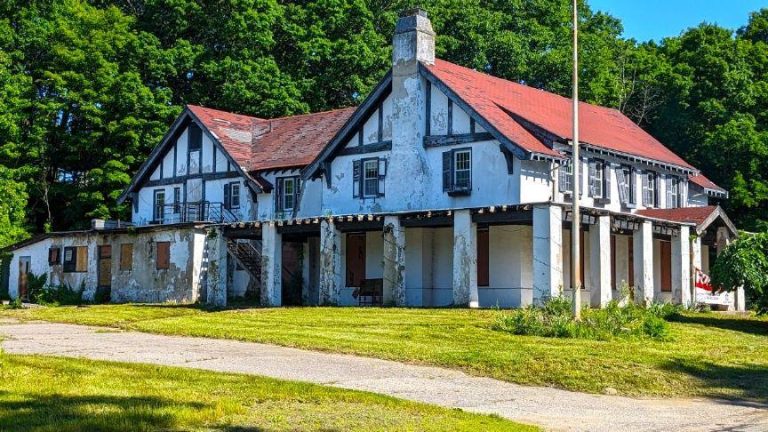
The work is being paid for by the federal government. The town does not own the property but is working to get it cleaned up as part of making it possible to redevelop the site.
“Taxes haven’t been paid on it for at least 15 years,” Lukes said, but the town is waiting for the EPA work, which will also include tearing down the building, before it opts to take possession.
Tax rate
Selectmen approved a single tax classification for the town, meaning residential and business properties are taxed the same.
That action by the board does not actually set the rate but affects the process.
The average house value rose to $490,341 for fiscal 2024, with single family houses rising in value between 10% and 11% this year based on sales from 2022, assessor Rosemary Scully said.
Since the tax base is consistently about 95% residential, creating a split that taxes businesses at a higher rate would require a substantial increase in business taxes in order to have any impact on residential rates.
She said the tax rate is expected to drop from $14.99 per thousand dollars of valuation to $14.15 per thousand. The final rate still has to be approved by state regulators.
The average tax bill will increase about $300 this year, she said.
As values rise, the math reduces the tax rate used to calculate individual tax bills.
The taxes themselves go up based on the the town’s spending that voters approved at town meeting.