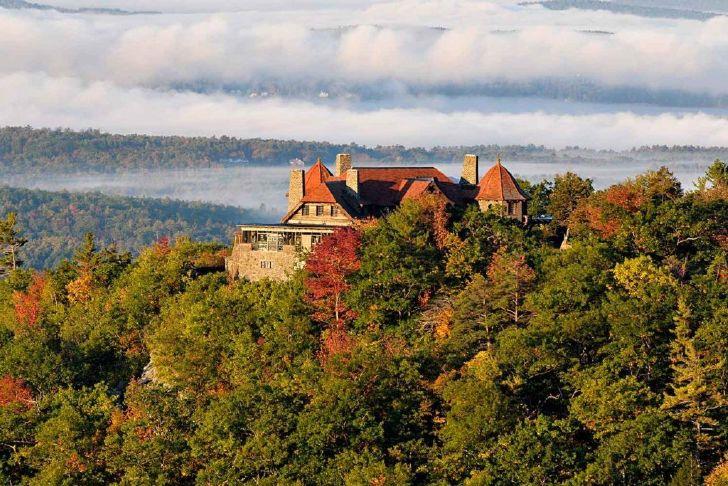

Typically, by my observation, most of the leaves are off the trees in our area by Oct. 15. Coincidentally, the average date of the first frost is Oct. 14 based. Neither of these things happened this year. The Zodiac sign for much of the month of October is Libra, meaning well-balanced or scale. The weather in October can vary greatly from warm and sunny to frosty and even a little snowy. Foliage viewing is a multibillion-dollar industry for New England.
From apple picking to hayrides, to corn mazes, to ski lift rides on mountains, including Mount Wachusett, and overnights in motels and hotels, fall brings people to New England and gets many of us outdoors. This year’s foliage was late and, as far as some are concerned, disappointing. Why was it late? Two reasons are being given: The surplus of rain this spring, summer and early Fall, and the lack of cool temperatures so far. Currently I am looking out my home office window at yellow, bronzish-purplish leaves that may not be as vibrant as some years, but look pretty nice. Many oaks, which drop their leaves last, are still holding on to their leaves here as November starts. One factor in prompting leaves to change is the length of daylight. We are past the Fall aka Autumnal Equinox, and the daily sunlight is less than 12 hours. By the end of November, we will be down to 9 hours and 20 minutes of sunlight per day, thus my title reference to War’s ‘70s hit “Slipping into Darkness.” This brings about changes, migration being a big change.
A quick recap from some things I mentioned in September. The hawk migration on Mount Wachusett was awesome. So far more than 16,000 raptors have flown past the mountain, wowing veteran hawk watchers and day visitors to the top. Thousands of broad winged hawks have passed, many in clouds, referred to as kettles, of up to 500. Many majestic bald eagles have passed through. I have been spending a day or two each week at the summit of Mount Wachusett. Turkey vultures, red-tailed hawks and sharp-shinned hawks were the big movers during October.
Saltwater fishing has not disappointed. My son, a few buddies and I have had a chance to get out and catch false albacore, bluefish and black sea bass. A highlight was having my cousin visit from Montana, where he has become an expert fly fisherman for trout, even guiding visitors who go there just for the fishing. He has rarely left for the past 25-30 years, but recently came East and asked if I still had my saltwater fly fishing gear. Of course I do! This past weekend we got him on the water outside of Bass River on Cape Cod and got him onto his first saltwater fly rod fish on a fly. Bluefish, fattening up for their migration south. It was better than catching my own fish, introducing someone to that new outdoor experience.
Here in the Wachusett area, we will really start to notice the change in wildlife due to migration. In addition to hawks passing through on their way south, many of our colorful spring/summer birds have departed for the southern U.S. and even Central and South America. Baltimore orioles, scarlet tanagers, warblers and other songbirds have left. If hummingbirds have not headed south yet, they will any day, as many of our flowers have gone by.
Often overlooked is the fact that many species arrive and take their place. For some birds we are their south. Having nested in northern New England and well north into Canada, they come here, where our winters are milder. Many are sparrows, such as dark-eyed juncos, song sparrows and white-throated sparrows, but snow buntings, pine siskins and some years evening grosbeaks come here and feed on seeds, acorns, nuts and berries from our summer plant growth. Various species of ducks, Canada geese and common loons will come to local lakes and ponds. They will stay as long as there is no ice and water stays open. Many local lakes and ponds never iced over last year, and many of them stayed. Last year there was a terrible shortage of acorns due to the dry/drought summer of 2022. This year, oak trees seem to have made up for it with a bumper crop. This is good for blue jays, deer, turkey, and, of course, squirrels.
As the leaves come off the trees, a walk through the woods often allows for better views of wildlife. I mentioned this last month and will again this month: Wearing orange during hunting season is a smart safety idea. Hunters are required to, and it is never a bad idea for non-hunters. November is when deer hunting season gets going. It is also the rut season, when deer mate and hope for fawns to be born next spring. The two weeks after Thanksgiving are the shotgun season for deer, but currently archery (aka bow and arrow) season is under way.
Pollinators, including bumblebees, yellow jackets, paper wasps, sweat bees, mason bees and flies are getting in their “last licks” on our fall blooming flowers. Many people complain about “bees” this time of year, as they will come around if you are drinking a beverage or eating something outdoors. They are drawn to apples and other fruits and berries fallen from trees and bushes. They are simply trying to get energy before the cold weather sends them into their winter hibernation spots. Recently, we were cleaning some fish in the side yard and yellow jackets came looking for a freebie. They seem intimidating, but as long as you do not touch, swing or hit them, they just grab their little piece and go on their way. In fact, the cool temperatures often make them lethargic and they have no interest in stinging. Recently I found bumblebees in the small pool of dog water on our deck. I scooped them out and put them on the flowers.
Featured Flora and Fauna
Red maple is our most common native species of maple trees. Most of us recognize the maple leaf from the Canadian Flag or jugs of maple syrup. The red maple is also our most colorful fall tree. They are deciduous trees, meaning they drop their leaves for the winter.
Why have many of our trees evolved dropping their leaves? It is a strategy for surviving the cold winter. The sun is weak, and the trees cannot make much food energy through photosynthesis, and the water in the leaves would expand and damage the leaves when it freezes in the winter. Solution? Drop the leaves and grow new ones in spring.
Often red maples grow next to ponds, lakes and swampy areas, and they are one of the earliest trees to “turn” in the fall. They are generalists, meaning they can live in a variety of habitats and soils, from wet to dry and sandy and rocky to rich and loamy. Thus they are common in the area and throughout much of the eastern part of the country, from Maine to the Carolinas. They are the trees with bright red and orangey-yellow foliage along pond edges in late September and early October. The stems of their leaves are reddish, and that is what gives them their name.
Many of the maple trees we see locally away from water have leaves that turn yellow and are Norway maples, brought in and planted for landscaping purposes. Red maples have hard wood that is great for burning in fireplaces and wood stoves and building small items such as clothespins, instruments and boxes. It is not best suited for lumber, as some other species are. The stems, twigs and seed pods are food for many animal species such as deer, moose, chipmunks and squirrels, and numerous bird species. They can be used for maple syrup. The sugar content of their sap is not quite as high as sugar maples, so one has to collect more sap, but being the most common species they can be a great source for local syrup production. Our neighbor taps them in their yard and ours, and the syrup is fantastic. Red Maple seeds are the “spinners” that fall like helicopters from trees, and for many of us as kids severed as Pinocchio noses, when we could split the end and stick them to our nose.
The last week of October was unusually warm. November is starting with more seasonable cool weather, which will mean we start to smell wood stove and fireplace smoke in the air, a sure sign winter is coming. For those who cannot get outside, or who are looking to learn more, keep an eye out for indoor programs as the weather cools and the days get shorter. The Goings On section here often lists them as do websites and social media for local libraries, clubs and organizations. Holden Grange recently hosted a program on a school in Kenya (Africa) being supported by local bird watchers from Central Mass., and the Ware River Nature Club’s (WRNC) monthly program at the Rutland library was on ants. Having seen it and learning about how important ants are in local ecosystems, I will think twice before killing one in my house. Mass Audubon also has great local indoor programs in winter months. On Oct. 25, the WRNC program at the Rutland Library featured Rutland resident Jim Morelli, who gets amazing photos using “game cams” he puts out in the Quabbin Reservoir area where he hikes regularly. His footage of moose, bears, deer, eagles and bobcats is amazing. These indoor programs can keep us going during the cold weather months.